

Contributed by John Joyce • Global Marketing Director, Brennan Industries Industrial automation requires a high level of performance while enhancing safety, saving time, boosting quality, and lowering costs. Pneumatics is used heavily in automation to provide gripping, clamping, pick-and-place, and more. As a result, reliable, efficient, and leak-free systems are imperative. Pneumatic fittings […]
Pneumatic
How do you identify fitting thread types?
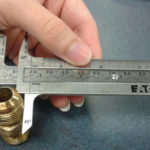
There are several thread types available when selecting the correct fittings for your pneumatic equipment. Choosing the correct thread type will ensure optimum compatibility with your equipment and avoid malfunction. You will find yourself looking through an endless amount of fitting options, so how do you select the right one? This guide will help you […]
Beswick expands adjustable and fixed position elbow fittings
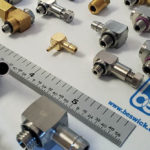
Beswick Engineering Co. Inc. has expanded its family of adjustable position and fixed position elbow fittings from the common 10-32 UNF thread size to include both smaller and larger thread sizes. In addition to several 10-32 threaded elbow models, the company now offers M3 metric, M5 metric, ¼-28 UNF, 5/16-24 UNF, 1/16 NPT, 1/8 NPT, […]
Cracking the code on existing pneumatic fittings
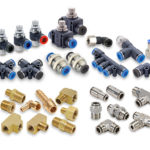
Here are some tips to properly identify pneumatic fitting and component sizes when working on or retrofitting existing older machines. Contributed by Kevin Kakascik, Technical Marketing Engineer, AutomationDirect It’s just another typical day in your operations office, located right off the manufacturing floor. Demand for the company’s product is very high and the entire production […]
Product guide simplifies tubing and barbed fitting installation, removal
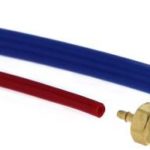
Tubing assembly and removal may seem simple, perhaps even trivial, until you have to do it yourself or you are responsible for writing assembly instructions. This is why Beswick has created its “How to install and remove polyurethane tubing when using barbed style fittings” product guide. It provides step-by-step installation and removal tips, complete with […]
Composite DOT fittings for pneumatic D.O.T. SAE J844 tubing

Composite D.O.T. push-in fitting from Poyconn are designed for use with the company’s pneumatic D.O.T. SAE J844 tubing. Their bodies are made of composite while the threaded head sections are made of brass. These fittings are rated for pressures from 0 to 145 psi and for temperatures from –40 to 140° F or –40 to […]
D.O.T.-approved push-in brass fittings

D.O.T.-approved push-in brass fittings from Polyconn are for use in many air-operated operations in vehicles, from air brake connections to gearshifts and windows and door locks to air operated seats and air horns. They are easy to use — simply push the fitting into the tubing for quick connection — no tools or loose parts […]
Barb fittings for miniature pneumatic control applications

Corrosion resistance and easy installation in small spaces make metal barbed fittings from IMI Norgren the ideal choice for a wide array of industrial automation uses including dispensing systems, gas sampling, and spraying systems. They are also used extensively in life science applications from laboratory equipment to medical devices. A single barb design allows for […]
What are the best pneumatic fittings for my application?
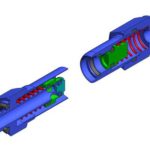
When looking for connectors for your pneumatic systems, it is important to understand what type of connection is being made. Fittings can be used to connect pneumatic tube, pipe or hose and each connection requires specific fittings. Pipe fittings, push-in fittings, barb adapters, compression fittings, and quick-connect fittings are some of the most common types […]
Ideal Tridon completes acquisition of ZSi Foster

Ideal Tridon Holdings Inc., a portfolio company of Snow Phipps Group, announced today that it has completed the acquisition of ZSi-Foster Acquisition Corp. from Pfingsten Partners. Terms of the transaction were not disclosed. Headquartered in Canton, Mich., ZSi-Foster is a specialty manufacturer and supplier of pipe, hose and conduit support and fastening solutions including clamps, […]